Sony's 67-Megapixel A7R VI Drops May 13 — Why The Spec Sheet Buries The Real Story
A new sensor, 8K video, and a quiet repositioning of what high-resolution photography is for. A preview of the camera Sony is about to put on stage.
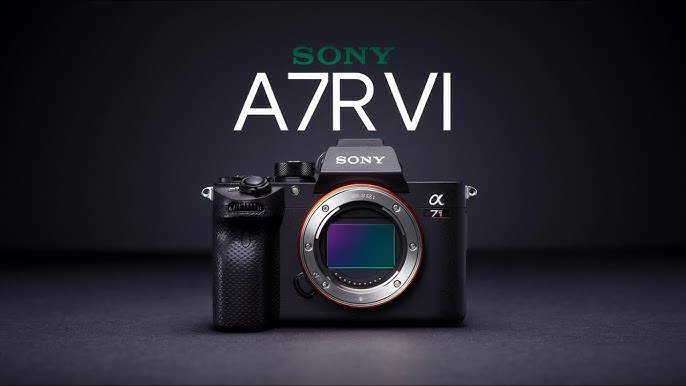
TL;DR
A preview of Sony's then-upcoming A7R VI: a 67MP partially-stacked sensor, 30fps 14-bit RAW bursts, and an expected $4,500-$4,900 price — positioned as a camera that could replace two bodies for working photographers.
Sony has been quiet about the A7R V’s successor for almost a year, and that silence is about to break. On May 13, the A7R VI is expected to drop with a new 67-megapixel partially-stacked CMOS sensor — a meaningful jump from the 61MP in the current model. The numbers will dominate the headlines. The actual story is more interesting.
## What’s expected on stage
A few things look locked in based on the leaks:
**67MP partially-stacked CMOS sensor.** Sony’s signaling that it doesn’t believe in choosing between resolution and speed anymore. The “partially stacked” architecture is the hedge — full-stack speed where it matters (autofocus rows, readout), classic CMOS density where it doesn’t.
**30fps burst shooting in 14-bit RAW.** This is the headline number. Until now, you’d shoot the high-resolution body or the speed body. The A7R VI is making a play to be both. 30fps at 67MP is more data per second than most professional video cameras handled five years ago.
**8K video, oversampled from 10K capture.** Internal full-frame 8K30 is the pro-video pitch. That’s enough resolution to crop heavily in post and still deliver 4K. Most people will shoot 4K and use the extra detail as a margin for stabilization, reframing, and zoom.
**16 stops of dynamic range** via dual conversion gain HDR in mechanical shutter mode. If this number holds in real-world testing, it’s the highest dynamic range in any consumer mirrorless camera ever shipped. Cinema cameras costing five times the price are at 17.
**8.5 stops of in-body image stabilization.** Diminishing returns territory at this point — but at 67MP, every fraction of a stop matters more, because the resolution unforgivingly shows micro-shake.
**BIONZ XR2 processor with a high-bandwidth LSI.** The boring component that actually unlocks the rest. Without massive throughput, none of those numbers above are usable in practice.
## Why this matters more than the megapixels
Here’s the part that gets lost in the spec sheet. Until now, “high resolution” in mirrorless meant “you give up speed, you give up video, you give up dynamic range.” The A7R series has always been the studio camera, the landscape camera, the methodical-shooter’s camera. The A1 was the speed-and-video flagship.
The A7R VI is the first camera that refuses to make those tradeoffs. 67MP, 30fps, 8K, 16 stops. If the leaks are right, this isn’t a successor to the A7R V — it’s a direct challenge to the A1 II and to the entire idea of having two flagship bodies in your bag.
That’s a positioning shift more than a spec bump.
## What to actually watch for at the reveal
A few things matter beyond the headline numbers:
**Rolling shutter.** A partially stacked sensor is faster than fully stacked, but slower than fully stacked. If readout is in the 1/200s range, electronic shutter is finally usable for sports and weddings. If it’s 1/100s, this is still a tripod-and-landscape camera.
**Heat management.** 8K video is a thermal nightmare. The Canon R5 launched with hard recording limits. The Sony A1 II has been more durable. Where the A7R VI lands here decides whether the video specs are real or marketing.
**Buffer depth.** 30fps at 67MP raw is *insane* throughput. A 200-shot buffer is meaningful. A 40-shot buffer is a press release.
**The new lenses.** Sony is rumored to announce a 16-28mm f/2.0 GM and a 100-400mm f/4.0 GM alongside the body. These are aggressive specs at the wide and telephoto ends. If both ship with the camera, it’s the strongest mirrorless launch lineup in years.
## Pricing — the elephant in the room
The A7R V launched at $3,900. Industry expectations put the A7R VI at $4,500–$4,900. That’s not unreasonable, but it pushes the camera into Canon R5 II and Nikon Z9 territory, where buyers are far more spec-sensitive.
For working photographers, the math is simple: if 30fps + 67MP + 8K is real, the A7R VI replaces two cameras. That makes $4,800 a discount, not a price hike.
## My read
If even 80% of these specs hold, this is the most consequential camera launch since the A1 in 2021. The A7R series has always been about resolution. The A7R VI is about quietly removing the reasons anyone would still buy a different body.
I’ll have a full breakdown after the May 13 reveal. For now: this is the announcement to actually pay attention to.
Ask this post
Ask a question and get an answer pulled only from this article — no outside guessing.